
The proposal

About Project
Red Clay.

Plain answers, each one carrying its source. Where the record is silent, we say so instead of guessing.

Where it would go

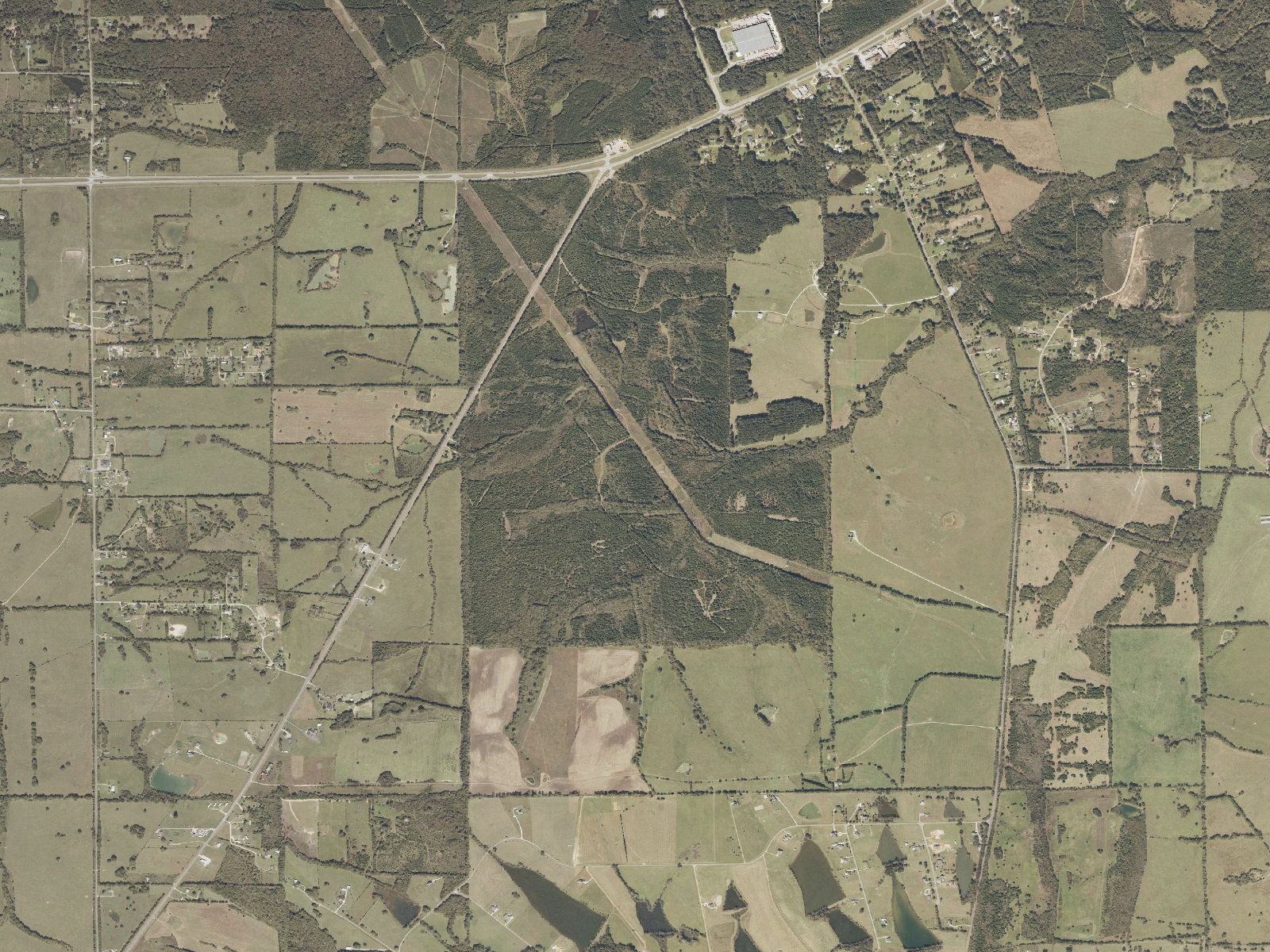
The ground in question.

Close USGS aerial imagery of the proposed Project Red Clay parcel at the junction of U.S. Highway 80 and Alabama Highway 21, roughly a mile and a half across.
The proposed parcel near the junction of U.S. 80 and AL-21, about a mile and a half across. USGS imagery, not a site plan.U.S. Geological Survey, National Map · Public domain
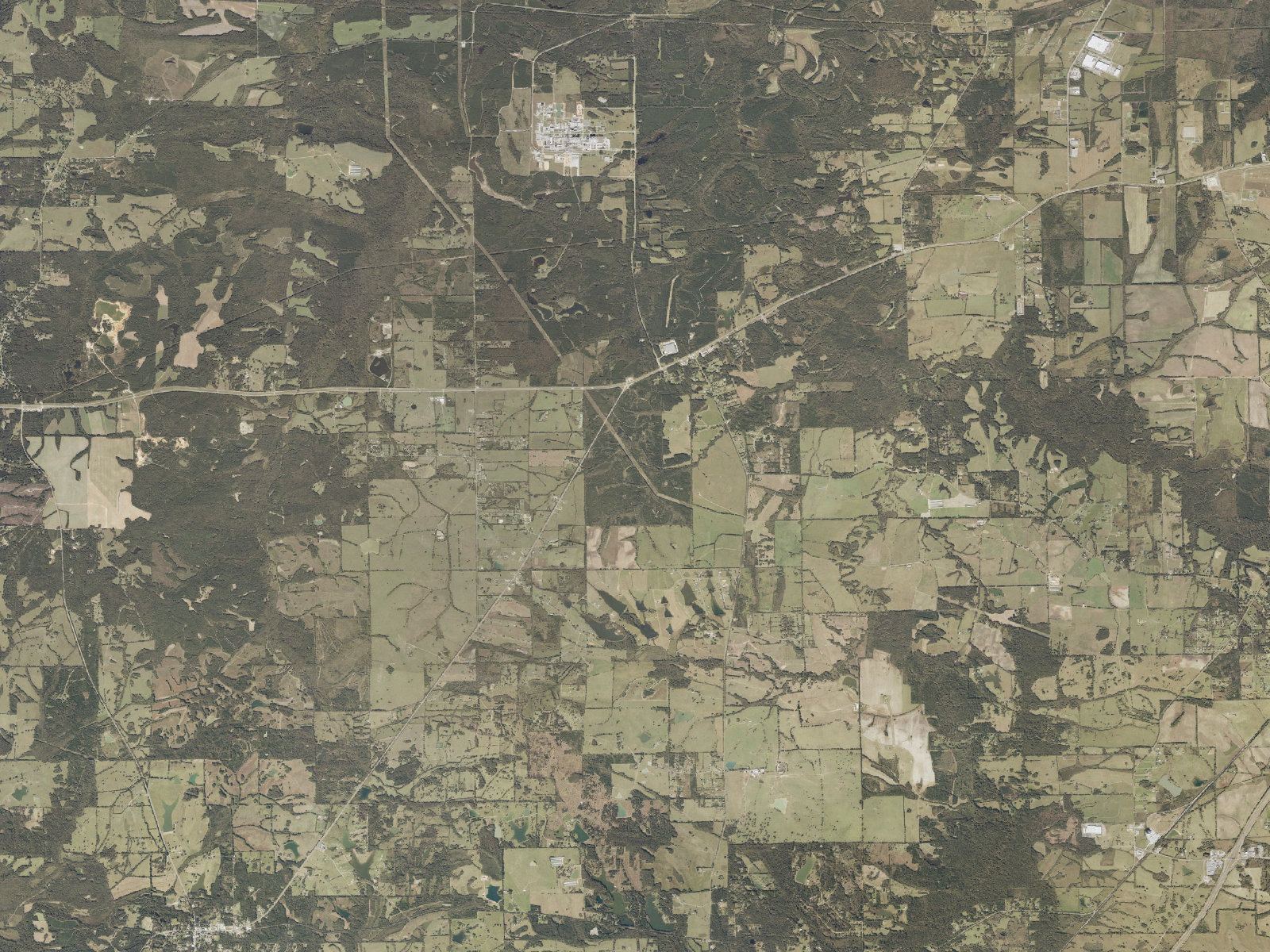
USGS aerial imagery showing the proposed parcel and the surrounding six miles of Lowndes County, with Burkville to the west and farmland and residential parcels around it.
Six-mile context aerial centered on the proposed site near Burkville. Imagery is USGS and may be one to three years old.U.S. Geological Survey, National Map · Public domain

These are federal aerial and topographic images of the area, not a site plan. No parcel boundary survey, option instrument, or engineering drawing has been published, so nothing here should be read as the project footprint.

What is Project Red Clay?

Project Red Clay is a proposed hyperscale data center campus on farmland in Lowndes County, Alabama, near the junction of U.S. Highway 80 and Alabama Highway 21 at Burkville, roughly six miles southwest of Montgomery.

The public site plan describes approximately 800 acres and roughly 3.01 million square feet of buildings: four data buildings of 720,000 square feet each, a 100,000 square foot warehouse, and a 30,000 square foot office.12

Who is behind it?

The developer is Cloverleaf Infrastructure, a Houston-based company incorporated in 2024. It raised $300 million in July 2024 led by NGP’s Sustainable Infrastructure platform and Sandbrook Capital, which is anchored by the Ontario Teachers’ Pension Plan.

Cloverleaf describes itself as a developer of clean-powered, ready-to-build sites. Its model is to acquire land and secure electrical power, then sell the assembled package to a hyperscale operator. That is why the company at the county meeting is often not the company that ends up running the facility.34

Who would actually operate it?

That has not been disclosed. The end user of the data center has not been named.

This is the single most important open question, because nearly everything a community would want to know — the real power draw, the real water draw, the noise profile, the number of jobs, the tax posture — depends on who the operator is and what they sign.5

How much electricity would it use?

The project is reported to have requested roughly 1,500 megawatts. For scale, Alabama’s new large-load statute defines a reviewable data-center customer as one with expected peak demand of at least 150 megawatts. The reported request is about ten times that threshold.

The study status, the ramp schedule, and the contract terms are not public. Which utility serves the specific parcel has also not been settled in the record.678

How much water would it use?

Cloverleaf describes closed-loop cooling drawing up to 100,000 gallons per day from the Pintlala Water System, framed as a one-time fill.

What is not disclosed is the part that matters most: the initial fill volume and schedule, makeup water under peak Alabama heat and humidity, blowdown, fire-flow demand, construction-period demand, and the volume, composition, and disposal of wastewater.

There is a reason to ask for the executed contract rather than the public summary. For a different data center at Hope Hull, the publicly stated figure was about 30,000 gallons per day, while the contract obtained through an open-records request allocated about 150,000 gallons per day plus about 90,000 gallons per day of wastewater. That was a different company and a different project. It is not a prediction about this one. It is the reason we ask to see the paper.91011

How many permanent jobs would it create?

The answer has changed depending on who is speaking. The developer’s website says at least 50. The Commission chairman, via WSFA, described 50 to 100. A coalition summary recorded 50 to 200. A WSFA interview with the company described 200 to 300.

Separately, Dr. Regina Moorer estimated in a letter to The Lowndes Signal that roughly nine permanent positions would go to Lowndes County residents at current capture rates.

The construction figure is the one consistent number: more than 1,000 construction jobs over three or more years.

We are not accusing anyone of lying. We are pointing out that a range from 50 to 300 is not a plan, and that reconciling it is the company’s job before a vote, not after.121314151617

What is the tax abatement, and why does the date matter?

The abatement at issue is 30 years. At the May 26, 2026 Commission meeting the Chairman stated three times that he would not vote for any 30-year data-center abatement.

HB399 caps Alabama data-center property-tax abatements at 20 years, down from 30, effective January 1, 2027, preserving a longer term only through a binding agreement with the Alabama Departments of Revenue and Commerce. It passed the Legislature unanimously and was sent to the Governor on April 10, 2026. We have not confirmed the signature, so we do not describe it as signed law.

The dollar value of the abatement has never been disclosed.

And the abatement is only one lever. As of late July 2026, no abatement request had been filed, no operator had been named, and the project had not been withdrawn. A commitment about the abatement is not a commitment about the project. The water contract, the electric-service agreement now under state review, and the permits are decided elsewhere, and the project has kept moving without any abatement request on file.1819202122

What about the $10 million for the county?

The developer describes $10 million for the county over the project lifecycle, routed through the Central Alabama Community Foundation: $1 million upfront and $9 million milestone-gated. Of the balance, $4 million depends on an electric-service contract and Public Service Commission approval, and $5 million is payable over five years after construction begins.

Nine of the ten million dollars is contingent. The gift-agreement terms, including the administrative-fee structure and the disbursement schedule, are not public. Whether an executed agreement exists, who controls the money, what happens if the project is sold, and whether the county could enforce the promise are all open questions.2324

Would my power bill go up?

Nobody in Lowndes County can answer that from the public record, because the contract is not public. The assurances are public: the Commission chairman said in April that the power bill will not go up and that the project will pay its own charges. The electric-service agreement and cost-allocation study that would demonstrate that assurance have not been released. That is precisely what the Alabama Public Service Commission opened Docket 33709 to examine, on July 7, 2026: a generic proceeding reviewing Alabama Power’s large-load data-center contracts.

Elsewhere, large loads have moved onto residential bills. Virginia regulators approved a new large-load rate class after reporting attributed an additional $11.24 per month in 2026 to data-center load for a typical Dominion residential customer. Ohio residents pay roughly $16 more per month tied to related capacity costs.

The most useful fact from Ohio is what happened next: after the state adopted protective ratemaking rules, data-center demand requests fell from about 30 gigawatts to about 13. How the rules are written changes how much power is actually asked for.252627

What would it do to property values?

The honest answer is that the evidence is mixed, and we are not going to pretend otherwise.

A George Mason University study of 2023 home sales found that homes closer to data centers in Northern Virginia tended to sell for higher prices. The authors caution that this may reflect that region’s pent-up housing demand and may not generalize to rural markets like ours.

We publish that study because it cuts against what many of our neighbors expect. A record you can trust is one that includes the findings you did not want.28

What about noise, air, and health?

The company estimates the facility would typically operate under 60 decibels at the property line, comparing the sound to air conditioning. No noise study for this site has been published. A Lowndesboro resident with more than 30 years of experience building, managing, and operating data centers warned commissioners that nearby residents could experience continuous fan noise known as acoustic roar.

Residents living near hyperscale data centers in Northern Virginia and Michigan have described headaches, vertigo, sleep disturbance, hypertension, and ear pain. Sustained sound above 65 decibels is associated with elevated stress and blood pressure.

Diesel backup generators emit substantially more nitrogen oxides than equivalent natural-gas generation, and during an outage a single facility can release a large share of its annual permitted emissions in days. The number of generators proposed here, their fuel, and their permitted run hours have not been disclosed.

These are documented experiences in other places and modeled national effects. They are not predictions about this site. They are the reason to require a noise study and an air permit review before a vote, not after.2930313233

Has this company walked away from other communities?

Yes, and it has said so in writing. In an email released under Michigan’s Freedom of Information Act, a Cloverleaf development principal wrote of a different site: "Cloverleaf will not work in communities where this type of development is unwelcome or the development does not match the existing use for the land. That is a decision we will make ten times out of ten."

The company withdrew from Greenleaf, Wisconsin in January 2026, and dropped its initial Michigan plans in October 2025 after the Dundee council voted to block the water supply, acknowledging it should have done more public communication and listening.

In Port Washington, Wisconsin, the other outcome is on the record too: Cloverleaf assembled and annexed 1,900 acres, then handed the package to Vantage Data Centers for an $8 billion campus.34353637

Who is working with Protect Lowndes County?

On July 27, 2026, Protect Lowndes County announced that it is working alongside the Alabama Rivers Alliance, a statewide network that has spent nearly thirty years building and supporting more than a hundred community and watershed groups working for clean water across Alabama.

The Southern Environmental Law Center and the Natural Resources Defense Council filed a public-records request with the Lowndes County Commission that same day, on behalf of both the Alabama Rivers Alliance and Protect Lowndes County. The letter and the county’s response, when it arrives, are on our public record and press pages.

Protect Lowndes County remains a separate organization from Four Five Strong LLC and from any other group opposing this project. Outside of the July 27 filing, no organization is authorized to speak on our behalf.38

Is this group against growth?

No. Lowndes County needs investment, jobs, and a tax base, and saying so is not a concession.

What we are against is being asked to approve a thirty-year commitment without knowing the operator, the power contract, the water contract, the wastewater plan, the generator count, or the enforceable value of what the county receives.

A good project survives disclosure. Our position is that the county should see the paper first.

What can I actually do about it?

Three things, in order. Add your name, so the public count of neighbors asking for disclosure is real and countable. Be in the room at the next Commission meeting, because that is where abatements are granted or denied. And write to the Public Service Commission on Docket 33709, because a letter from a Lowndes County resident goes on the state’s record rather than ours.25

Still unanswered

Questions a vote should not outrun.

  • Who is the tenant?

    The end user of the data center remains unnamed.

  • Which utility serves the parcel?

    The 1,500 MW figure is attributed to Alabama Power, but earlier material also names Pioneer Electric. It has not been settled.

  • What is the real water plan?

    Peak versus average gallons per day, makeup water, blowdown, and wastewater volume, composition, and disposal are not disclosed.

  • How does the power reach the site?

    Transmission route, redundancy, upgrades, and cost allocation are undisclosed. A single-source transmission line was flagged as a vulnerability at the June 29 meeting.

  • What is the abatement worth?

    The dollar value of the 30-year abatement has not been released.

  • Which parcel, and who is the seller?

    The specific parcel and seller are not established in the public record. No recorded option or deed has been located.

  • Is the parcel in a flood zone?

    The FEMA flood-zone designation for the parcel is not disclosed.

  • Are the community benefits enforceable?

    Whether an executed CACF gift agreement exists, who controls expenditures, what happens on assignment or sale, and whether residents or the county can enforce the promise are all open.

  • Is HB399 signed?

    HB399 passed the Legislature and was sent to the Governor. Its signature status has not been confirmed.

For the company

Four things only Cloverleaf can reconcile.

  1. Reconcile the "at least 50" permanent-jobs figure with the 200 to 300 estimate.
  2. Reconcile the 3.01 million, 3.7 million, and 5 million square-foot figures.
  3. Provide the power-load ramp, water model, generator count, transmission route, and wastewater plan.
  4. Explain what happens to the promises and community benefits after an assignment or sale.

These are questions, not accusations. Figures changing over time is not by itself evidence of bad faith. It is evidence that the public version is not settled enough to vote on.

Sources on this page

  1. An 800-acre data center is being quietly pushed in Lowndes County, Yellowhammer News (2026-04-01). ICN-reviewed company plan — view source

    ReportedAccessed 2026-07-12
  2. Rural Alabama Community Opposes Hyperscale Data Center, Inside Climate News (2026-06-10). Company plan reviewed by ICN — view source

    ReportedAccessed 2026-07-12
  3. Wilson Sonsini Advises Cloverleaf on $300 Million Capital Raise, Wilson Sonsini Goodrich & Rosati (2024-07-01). Transaction announcement — view source

    Accessed 2026-07-27
  4. Project Red Clay / company description, Cloverleaf Infrastructure (2026-07-10). Developer website, corroborated by Yellowhammer News — view source

    ReportedAccessed 2026-07-27
  5. Vault open-question register, Master Evidence Dossier (2026-07-12). Open questions

    Not disclosed by the projectAccessed 2026-07-12
  6. Rural Alabama Community Opposes Hyperscale Data Center, Inside Climate News (2026-06-10). ICN and public Cloverleaf statements — view source

    ReportedAccessed 2026-07-12
  7. SB270 enrolled, enacted as Act 2026-610, Alabama Legislature (2026-10-01). Ala. Code § 37-4-22.1 — view source

    Accessed 2026-07-12
  8. Vault open-question register, Master Evidence Dossier (2026-07-12). Open questions

    Not disclosed by the projectAccessed 2026-07-12
  9. Cloverleaf responds to Lowndes County data center concerns, WSFA 12 (2026-06-04). Cloverleaf statement to ICN and WSFA — view source

    ReportedAccessed 2026-07-12
  10. Vault open-question register, Master Evidence Dossier (2026-07-12). Open questions

    Not disclosed by the projectAccessed 2026-07-12
  11. Water-service contract obtained by open-records request, Montgomery-area water system (2026-05-01). Open-records production

    ReportedAccessed 2026-07-27
  12. Project Red Clay, Cloverleaf Infrastructure (2026-07-10). Developer website — view source

    DisputedAccessed 2026-07-10
  13. Lowndes County leaders, residents continue debate over Project Red Clay, WSFA 12 (2026-04-30). From the 2026-04-28 meeting — view source

    DisputedAccessed 2026-07-12
  14. NRDC/SELC meeting summary, NRDC / Southern Environmental Law Center (2026-06-29). Meeting summary

    DisputedAccessed 2026-07-12
  15. Cloverleaf responds to Lowndes County data center concerns, WSFA 12 (2026-06-04). WSFA interview — view source

    DisputedAccessed 2026-07-12
  16. Letter to the editor, The Lowndes Signal (2026-04-30). Letter to the editor, late April 2026

    ReportedAccessed 2026-07-12
  17. Project Red Clay, Cloverleaf Infrastructure (2026-07-10). Developer website — view source

    ReportedAccessed 2026-07-10
  18. Stakeholders consider potential data center project, The Lowndes Signal (2026-05-26). Commission meeting — view source

    ReportedAccessed 2026-07-12
  19. Alabama Senate sends bill to limit data center tax breaks to Governor, Alabama Reporter (2026-04-10). Legislative action — view source

    ReportedAccessed 2026-07-27
  20. HB399 Enrolled, Alabama Legislature (2026-04-09). Enrolled text, Sec. 40-9B-3(12) and Sec. 3; sponsor Rep. Leigh Hulsey (R-Helena) — view source

    ReportedAccessed 2026-07-27
  21. Vault open-question register, Master Evidence Dossier (2026-07-12). Open questions

    Not disclosed by the projectAccessed 2026-07-12
  22. Mystery data center could receive 30-year tax break beside sacred Selma march ground, Yellowhammer News (2026-07-24). Reporting by Sherri Blevins — view source

    ReportedAccessed 2026-07-27
  23. Cloverleaf emphasizes data center benefits amid community concerns, The Lowndes Signal (2026-06-01). Developer statements — view source

    ReportedAccessed 2026-07-12
  24. Central Alabama Community Foundation, IRS Form 990 (EIN 63-0842355), ProPublica Nonprofit Explorer (2026-01-01). Nonprofit Explorer — view source

    Accessed 2026-07-27
  25. Docket 33709 public comment and reply information, Alabama Public Service Commission (2026-07-07). Generic proceeding — view source

    Accessed 2026-07-12
  26. Virginia regulators approve new Dominion rates, Inside Climate News (2026-01-07). Rate class approval — view source

    Accessed 2026-07-27
  27. Data Center Power Demands Are Contributing to Higher Energy Bills, Environmental and Energy Study Institute (2026-01-01). Ratemaking and demand — view source

    Accessed 2026-07-27
  28. Study: Home prices are higher when house is near a data center, George Mason University Schar School (2025-11-01). Schar School study — view source

    Accessed 2026-07-27
  29. Cloverleaf responds to Lowndes County data center concerns, WSFA 12 (2026-06-04). Aaron Bilyeu statements — view source

    ReportedAccessed 2026-07-27
  30. Mystery data center could receive 30-year tax break beside sacred Selma march ground, Yellowhammer News (2026-07-24). Reporting by Sherri Blevins — view source

    ReportedAccessed 2026-07-27
  31. Living in Hell: Data Center Neighbors Grapple With Noise, Air Pollution, U.S. News & World Report (2026-04-28). Resident reporting, with EESI on the decibel threshold — view source

    Accessed 2026-07-27
  32. California Agency Urged to Protect Public Health, Environment From Data Center Diesel Generators, Center for Biological Diversity (2026-04-22). Advocacy filing — view source

    ReportedAccessed 2026-07-27
  33. Health implications of the rapid rise of data centers in Virginia: an exploratory assessment, Frontiers in Climate (2026-01-01). Exploratory assessment — view source

    ReportedAccessed 2026-07-27
  34. Cloverleaf vs. Other Developments (Draft), email released under Michigan FOIA, Village of Dundee / Dundee Township, Michigan (2025-09-23). Email to Dundee officials, cc Aaron Bilyeu

    Accessed 2026-07-27
  35. Cloverleaf backs out of data center project in Greenleaf, Wisconsin, DataCenterDynamics (2026-01-01). Bilyeu verbatim statement — view source

    Accessed 2026-07-27
  36. Cloverleaf drops initial plans for Michigan data center; council votes to block water supply, DataCenterDynamics (2025-10-01). Company statement — view source

    Accessed 2026-07-27
  37. Port Washington approves $8 billion Vantage Data Centers project, BizTimes (2025-05-01). Project approval — view source

    Accessed 2026-07-27
  38. Records Request for Documents related to Project Red Clay Data Center, Southern Environmental Law Center and Natural Resources Defense Council (2026-07-27). Letter to County Administrator Kimberly McGrew-West — view source

    Accessed 2026-07-28

Last updated